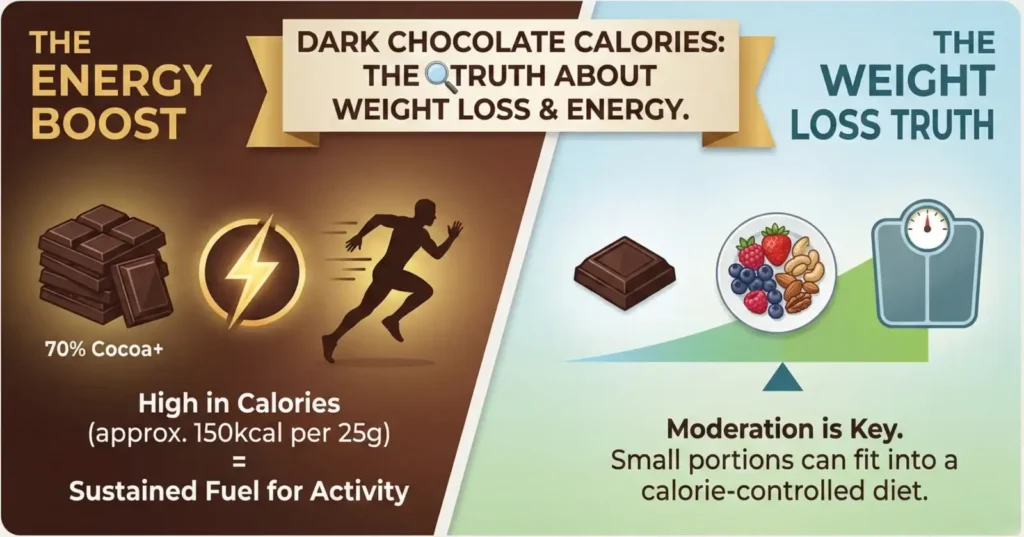
- Dark chocolate with 70%+ cacao can fit into keto macros with careful portion control (about 10g net carbs per ounce).
- Most "keto chocolate" brands use erythritol, which a 2023 Cleveland Clinic study linked to doubled heart attack and stroke risk.
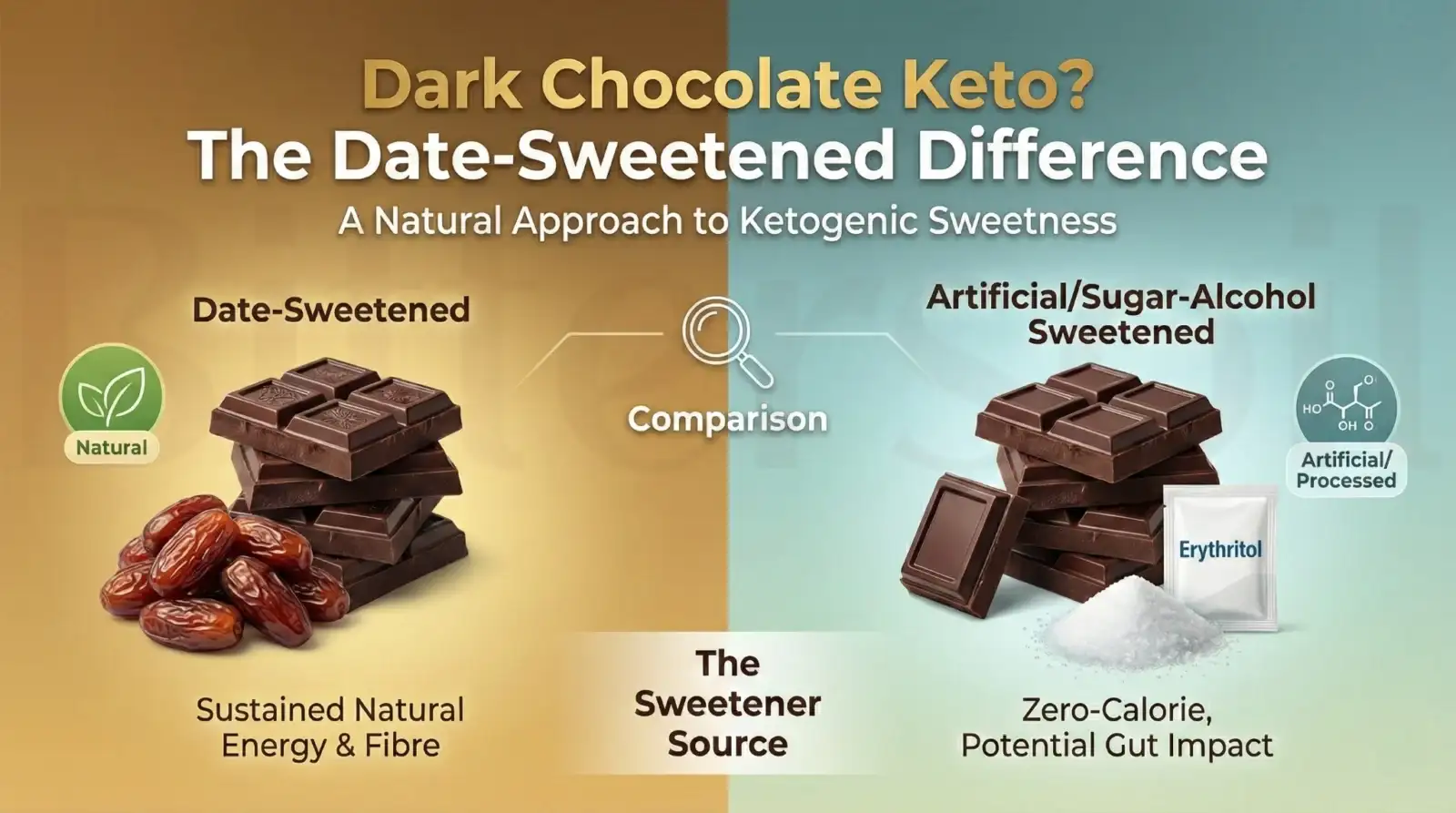
- Date-sweetened chocolate provides natural carbs with fiber that slows absorption, avoiding both refined sugar spikes and artificial sweetener risks.
The Keto Chocolate Question Everyone's Asking
You're three weeks into keto. You've said goodbye to bread, pasta, and your favorite desserts. The cravings are manageable, except for one.
Chocolate.
Every nutrition site tells you the same thing: "Yes, dark chocolate is keto—just choose 70%+ cacao and watch your portions." Then they recommend brands sweetened with stevia and erythritol.
At Bittersoil, we chose date-sweetened chocolate from day one—not because we predicted this research, but because artificial sweeteners taste metallic and don't belong in real food. We didn't choose dates to be contrarian. We chose them because artificial sweeteners taste metallic, cause digestive distress, and don't belong in real food.
Now the science is catching up to what your taste buds already knew.
Here's everything you need to know about eating chocolate on keto—including why the sweetener matters more than you think.
Understanding Keto Basics: Net Carbs and Chocolate
Before we dive into sweeteners, let's clarify what makes chocolate keto-compatible in the first place.
What Is the Keto Diet?
The ketogenic diet is a high-fat, moderate-protein, very low-carb approach designed to push your body into ketosis—a metabolic state where you burn fat for fuel instead of glucose.
Most people maintain ketosis by consuming 20-50g of net carbs per day. Some can tolerate up to 50g, but stricter approaches cap at 20g.
The Net Carbs Calculation
Net carbs are calculated by subtracting unabsorbable carbs from the total carb content. Fiber is a type of carbohydrate that your body doesn't fully digest. Only the net carbs count toward your daily limit.
Dark Chocolate's Carb Content
Depending on the brand, 1 ounce of 70-85% dark chocolate contains up to 13 grams of carbs and 3 grams of fiber, which means it has about 10 grams of net carbs.
Can You Eat Dark Chocolate on Keto?
Yes - with three critical caveats.
It Must Be 70%+ Cacao
The same amount of 60-69% dark chocolate contains 12.6g net carbs. Lower cacao percentages mean more sugar. The math stops working below 70%.
Some ultra-dark options (85-90%) drop to 7-8g net carbs per ounce, giving you more flexibility.
Portion Control Is Non-Negotiable
One ounce = approximately 4-5 squares. That's your daily chocolate allowance. No exceptions unless you're skipping all other carb sources.
The Sweetener Matters More Than You Think
This is where most keto chocolate guidance fails you.
The Erythritol Problem: What Most Keto Brands Won't Tell You
Walk into any health food store and you'll see the same brands dominating the "keto chocolate" shelf: Lily's, ChocZero, and others using stevia or monk fruit blended with erythritol.
Marketing calls it "zero calorie" and "tooth-friendly." What they don't mention is the cardiovascular research.
🚨 The 2023 Cleveland Clinic Study
In February 2023, researchers at Cleveland Clinic published findings in Nature Medicine after studying over 4,000 people. The results were stark: people with the highest blood levels of erythritol faced roughly double the risk of heart attack and stroke.
One keto chocolate bar. One protein shake. One pint of sugar-free ice cream. That's all it takes to flood your bloodstream with a compound that makes your blood stickier for multiple days.
Why Brands Use Erythritol
Erythritol serves a functional purpose. It provides bulk and texture that isolated stevia or monk fruit can't replicate alone. It's also marketed as "natural" because it's fermented from corn. But natural doesn't mean safe at high daily doses.
The Taste Trade-Off
Even if you're willing to accept the cardiovascular concerns, there's the taste problem. Consumer surveys show that 35-40% of stevia users report dissatisfaction with the metallic or licorice-like aftertaste. The cooling sensation from erythritol compounds this issue.
The Date Question: Are Dates Keto-Friendly?
Here's where the conventional wisdom breaks down. Every keto resource will tell you: "Avoid dates. They're too high in carbs."
And they're right — if you're eating dates by themselves.
Medjool dates contain around 68g of net carbs per 100g serving (approximately 5 pitted dates). Therefore, one date contains around 14g of net carbs.
That's why dates don't work as a standalone keto snack. But date-sweetened chocolate is different.
Why Date-Sweetened Chocolate Works for Keto
When date powder is incorporated into chocolate, three things happen:
You're not eating whole dates. You're consuming chocolate where dates provide sweetness in small, measured amounts.
A 30g serving of date-sweetened chocolate might contain 4-5g of net carbs from dates — far less than eating dates directly.
The glycemic load is calculated using the glycemic index number and multiplying it by the number of grams of carbohydrates in the portion that you're eating, and then dividing by 100.
Dark chocolate's high fat content (12g per ounce) slows the absorption of natural sugars from dates. This prevents the blood sugar spike that kicks you out of ketosis.
Date powder retains the natural fiber from dates (approximately 7g per 100g). When combined with cocoa's additional fiber, the net carb impact drops.
Date sugar has a glycemic index of about 55, compared to regular sugar's glycemic index of 65. Lower GI means slower, steadier blood sugar response — critical for maintaining ketosis.
The Glycemic Index vs. Glycemic Load Distinction
Here's where most people get confused. Dates have a glycemic index of 31, which would be acceptable on a low glycemic diet. However, one serving size provides 46g of carbohydrate.
Dates have a low-to-moderate GI (31-55 depending on variety) but high GL when eaten in large amounts.
In date-sweetened chocolate, the portion size is small enough that the GL stays manageable — especially when combined with fat and fiber that further blunt absorption.
Keto Chocolate Comparison: What's Actually in Your Bar
Here's what you're really eating when you choose different "keto-friendly" chocolates.
| Brand/Type | Net Carbs (30g) | Sweetener | Cardio Risk | Digestive Impact | Taste Profile | Price |
|---|---|---|---|---|---|---|
| Bittersoil (Date-Sweetened) | 8-10g | Dates Powder (GI: 42-55) | None Identified | Excellent (Prebiotic fiber) | Rich, caramel, natural | $2.50 |
| Lily's Dark Chocolate | 4g | Stevia + Erythritol | Elevated (erythritol study) | Poor (gas, bloating) | Metallic aftertaste, cooling | $2.00 |
| ChocZero | 2-3g | Monk Fruit + Erythritol | Elevated | Poor (GI issues) | Better than stevia, still artificial | $2.75 |
| Lindt 85% Excellence | 7g | Cane Sugar | Standard Risk | Good | Bitter, high-quality cocoa | $1.50 |
| Hu Kitchen | 9g | Coconut Sugar | Moderate (Still refined) | Good | Clean, but spikes faster | $3.00 |
| Generic 70% | 10g | Cane Sugar | Standard Risk | Moderate | Varies by brand | $1.00 |
How to Fit Dark Chocolate into Your Keto Macros
The Daily Square Method
- Dose: 15-20g daily
- Net Carbs: 5-7g
- Timing: After dinner ritual
Treats chocolate as a daily pleasure, not a binge food. Two squares satisfy cravings without derailing macros.
Best For: Strict Keto (20g/day)The Strategic Indulgence
- Dose: 30g (2-3x per week)
- Net Carbs: 8-10g
- Timing: Workout days
Uses chocolate as a reward for adherence and training. Glycogen depletion creates more carb flexibility.
Best For: Moderate Keto / AthletesThe Fat Bomb Approach
- Dose: 20g + Nut Butter
- Net Carbs: 6-8g
- Macros: High Fat, Low Carb
Blend chocolate with additional fats to increase satiety and create a more keto-aligned macro profile.
Best For: Hunger ManagementExample Daily Macro Budget
Total Daily Allowance: 25g net carbs (Moderate Keto)
You stay in ketosis while enjoying real chocolate that doesn't taste like a chemistry experiment.
What Happens to Ketosis When You Eat Chocolate?
Blood Sugar Response Matters
Ketosis requires blood glucose to stay low enough that your body preferentially burns fat for fuel.
Eating chocolate—any chocolate—will raise blood glucose temporarily. The question is: by how much, and for how long?
- 📈 Spikes within 30-45 minutes
- Insulin response triggers rapid uptake
- Blood sugar crashes 60-90 minutes later
- May temporarily reduce ketone production
- ➖ Minimal blood glucose response
- No insulin spike
- Maintains ketosis...
- ...but introduces cardiovascular concerns
- 〰️ Moderate rise over 45-60 minutes
- Fiber + fat slows absorption
- Steady decline back to baseline over 2-3 hours
- Ketosis maintained if within carb limits
The Fiber Advantage
Studies suggest that enjoying dates in moderation alongside healthy fats and proteins can help to manage blood sugar levels.
This is exactly what happens in date-sweetened chocolate. The cocoa butter (fat) and fiber work together to prevent the rapid glucose spike that would disrupt ketosis.
Testing Your Own Response
The only way to know your individual response is to test.
- 1. Measure fasting blood glucose and ketones in the morning
- 2. Eat 30g of your chosen chocolate
- 3. Test blood glucose at 30, 60, and 120 minutes post-consumption
- 4. Test ketones 2-3 hours later
- ✓ Blood glucose rises less than 30 mg/dL from baseline
- ✓ Returns to near-baseline within 2 hours
- ✓ Ketones remain above 0.5 mmol/L
If your numbers look worse, reduce portion size or switch chocolate types.
The Fruit Sweetening Method: Why It Matters for Keto
Most keto advice focuses obsessively on net carbs. But the source of those carbs determines how your body responds.
Isolated Compounds
(Stevia, Erythritol)- ✕ Zero carbs, zero nutrients
- ✕ May trigger sweet cravings
- ✕ Potential health risks
- ✕ Artificial taste
Refined Sugar
(Cane, Coconut Sugar)- ✕ Rapid glucose spikes
- ✕ Strong insulin response
- ✕ Empty calories
- ✕ Kicks you out of ketosis
Date Powder
(The Whole-Fruit Method)- ✓ Natural carbs with context
- ✓ Moderate GI (42-55)
- ✓ Prebiotic fiber
- ✓ Tastes like real food
When you eat date-sweetened chocolate, you're not just counting carbs. You're consuming a whole food that your body recognizes and processes efficiently.
The Gut Microbiome Connection
Emerging research shows that artificial sweeteners disrupt gut bacteria communication—a process called "quorum sensing." This can affect everything from immunity to mood.
For keto dieters already dealing with reduced fiber intake, date-sweetened chocolate becomes a functional food—not just a treat.
Learn more about gut health and sweeteners →Common Mistakes Keto Dieters Make with Chocolate
Mistake #1: Assuming All "Keto Chocolate" Is Safe
Marketing labels like "keto-friendly" and "zero net carbs" don't tell you about sweetener safety or long-term health effects.
Always read ingredients. If erythritol or maltitol appears in the top three ingredients, you're consuming it in significant amounts.
Mistake #2: Ignoring Serving Sizes
A standard 28-gram serving of 70-85% dark chocolate contains about 13 grams of carbs, including roughly 3 grams of fiber, resulting in around 10 grams of net carbs.
Eat double the serving? You've consumed 20g net carbs—your entire daily allowance.
Mistake #3: Eating Chocolate Without Tracking Other Carbs
That spinach salad at lunch? 4g net carbs. The almond flour in your keto bread? 6g net carbs. A handful of nuts? 3g net carbs.
If you don't track comprehensively, that "keto-friendly" chocolate bar becomes the straw that breaks ketosis.
Mistake #4: Choosing Chocolate Based on Carbs Alone
Net carbs matter. But so do ingredient quality, sweetener safety, taste satisfaction, and long-term sustainability.
A chocolate you hate eating isn't keto-friendly. It's a compliance failure waiting to happen.
Mistake #5: Binging After Deprivation
Restricting all sweets for weeks, then eating an entire bar of dark chocolate in one sitting, spikes glucose dramatically—even if it theoretically "fits your macros."
Better approach: Build chocolate into your daily routine in small, consistent amounts.
Special Considerations: Who Should Be Cautious
Type 1 or Type 2 Diabetics
Dietary carbohydrate is the major determinant of postprandial glucose levels. For diabetics using keto as a therapeutic intervention, even 10g of net carbs from chocolate can affect blood glucose management.
People with Cardiovascular Risk Factors
If you have a personal or family history of heart disease, stroke, or blood clotting disorders, the erythritol research should concern you.
Those with IBS or Digestive Sensitivities
Sugar alcohols are notorious for causing gas, bloating, and diarrhea—especially when consumed regularly. Even "gut-friendly" erythritol can trigger issues in sensitive individuals.
The Bottom Line
- ✓ Dark chocolate with 70%+ cacao can fit into keto macros if you limit portions to approximately 1 ounce (28g) and account for 8-10g net carbs in your daily tracking.
- ✓ Most "keto-friendly" chocolate brands use erythritol, which a 2023 Cleveland Clinic study linked to doubled cardiovascular risk — a trade-off many keto dieters aren't aware of when choosing "sugar-free" options.
- ✓ Date-sweetened chocolate provides natural carbohydrates with fiber, potassium, and prebiotic benefits that support gut health while avoiding both refined sugar spikes and artificial sweetener risks.
Ready to enjoy keto-friendly chocolate without artificial sweeteners or cardiovascular concerns?
Try our 70% Date-Sweetened Dark Chocolate Made with Date Powder. Each serving delivers 8-10g net carbs from real food, not chemistry labs.
Shop 70% Dark ChocolateCurious about the taste difference between artificial and natural sweeteners?
See our comparison: Why We Don't Use Stevia: The Bitter Truth About "Natural" Sweeteners →Frequently Asked Questions
Can I eat dark chocolate every day on keto?
Yes, if you stay within your net carb limit. Most people can fit 15-30g of 70%+ dark chocolate into a 20-30g daily carb allowance, but you'll need to reduce carbs elsewhere. Track consistently and test ketone levels if unsure.
How do I know if chocolate kicked me out of ketosis?
Use a blood ketone meter. Nutritional ketosis is generally defined as blood ketone levels between 0.5-3.0 mmol/L. If your ketones drop below 0.5 mmol/L after eating chocolate, reduce your portion size or choose a lower-carb option.
Is 85% dark chocolate better than 70% for keto?
Yes, generally. Higher cacao percentages contain less sugar and fewer net carbs (typically 7-8g vs. 10g per ounce). However, the bitter taste can be challenging. Find the highest percentage you actually enjoy eating—compliance beats perfection.
Why do keto chocolate brands use erythritol if it's risky?
Erythritol provides bulk, texture, and tooth-friendly properties that isolated stevia or monk fruit can't replicate alone. It's also FDA-approved as GRAS (Generally Recognized As Safe). The 2023 cardiovascular research is relatively new, and regulatory changes take years.
Can I make my own keto chocolate at home?
Absolutely. Melt 85-90% cacao chocolate, add a small amount of date paste or your preferred keto sweetener, pour into molds, and freeze. This gives you complete control over ingredients and portions. Use about 5-10g of date paste per 100g chocolate for mild sweetness.
What about milk chocolate or white chocolate on keto?
No. Milk chocolate contains 50-60% less cocoa and significantly more sugar (20-30g per ounce). White chocolate has no cocoa solids at all and is essentially cocoa butter + sugar. Neither fits keto macros unless consumed in tiny amounts (5-10g).
Do I need to choose organic or fair-trade chocolate for keto?
Not for ketosis itself, but quality matters for health. Conventional cocoa can contain pesticide residues and heavy metals (cadmium, lead). If you're eating chocolate regularly, invest in organic, tested brands to minimize toxin exposure.
Can I combine chocolate with MCT oil to boost ketones?
Yes, this is a common "fat bomb" strategy. Melt dark chocolate with 1-2 tablespoons of MCT oil or coconut oil, pour into molds, and freeze. The medium-chain triglycerides provide quick ketone fuel, making the chocolate more keto-optimized. Be aware that MCT oil can cause digestive distress in large doses.