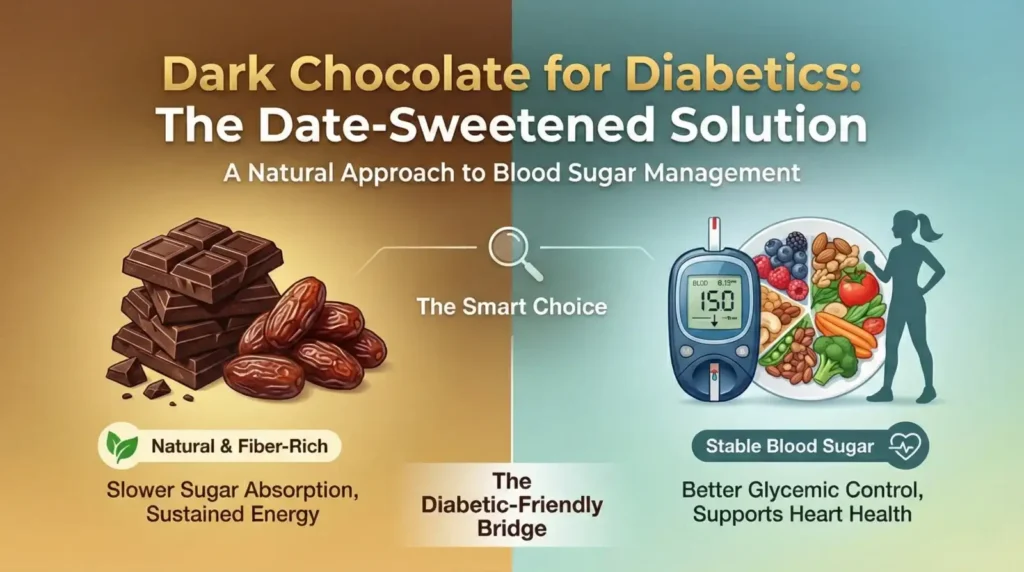
- Most commercial stevia is a heavily processed extract, not a natural leaf.
- Stevia often causes metallic aftertaste, cooling sensation, and digestive discomfort in chocolate.
- Bittersoil uses The Whole-Fruit Sweetening Method, where sweetness comes from real dates, not isolated chemicals.
The “Healthy” Chocolate Problem
We all know refined sugar is the enemy. It spikes insulin, crashes energy, and contributes to long-term inflammation.
So the world turned to “sugar-free” chocolates. Eat chocolate, skip the guilt - at least on paper.
But have you noticed what actually happens after eating most “keto” or “diet” chocolate bars?
First comes a strange metallic tang at the back of your throat. Then a cooling sensation, almost like mint toothpaste. Later, bloating or digestive discomfort no one warns you about.
Why does “healthy” chocolate so often taste chemical?
At Bittersoil, we asked a different question. Instead of engineering a chemical solution to sweetness, we searched for a food solution.
The answer wasn’t in a laboratory. It was in nature - dates.
What Is Stevia? (And Why It’s Not as “Natural” as You Think)
Walk down any health-food aisle and you’ll see “Stevia Sweetened” everywhere. Marketing has convinced us that stevia is simply a leaf.
That’s only half the truth.
Yes, stevia comes from the Stevia rebaudiana plant. But the white powder or liquid used in chocolate is far removed from the original leaf.
How Commercial Stevia Is Actually Made
To remove bitterness and intensify sweetness, manufacturers rely on heavy processing.
Leaves are steeped in water and alcohol. Ethanol or methanol isolates steviol glycosides like Rebaudioside-A. The extract is then bleached and crystallized.
By the time it reaches your chocolate, it’s a highly concentrated substance - often 200–300 times sweeter than sugar.
This overwhelms taste receptors and triggers bitterness alongside sweetness.
If sweetness requires a chemistry set, it probably doesn’t belong in your daily snack.
The Metallic Aftertaste: Why Stevia Tastes “Off” in Chocolate
The lingering bitterness and cooling sensation many people notice aren’t accidental. They’re structural.
The Biology Behind the Bitterness
Stevia activates sweet receptors but also stimulates bitter receptors (TAS2R family).
To mask this, brands often blend stevia with sugar alcohols like erythritol or maltitol.
These additives disrupt mouthfeel and create the artificial cooling effect.
Premium cacao deserves clarity - not chemical noise.
- This isn't just perception. Consumer research shows that 35-40% of stevia users report dissatisfaction with its metallic or licorice-like aftertaste - a problem that doesn't exist with whole-fruit sweetening.
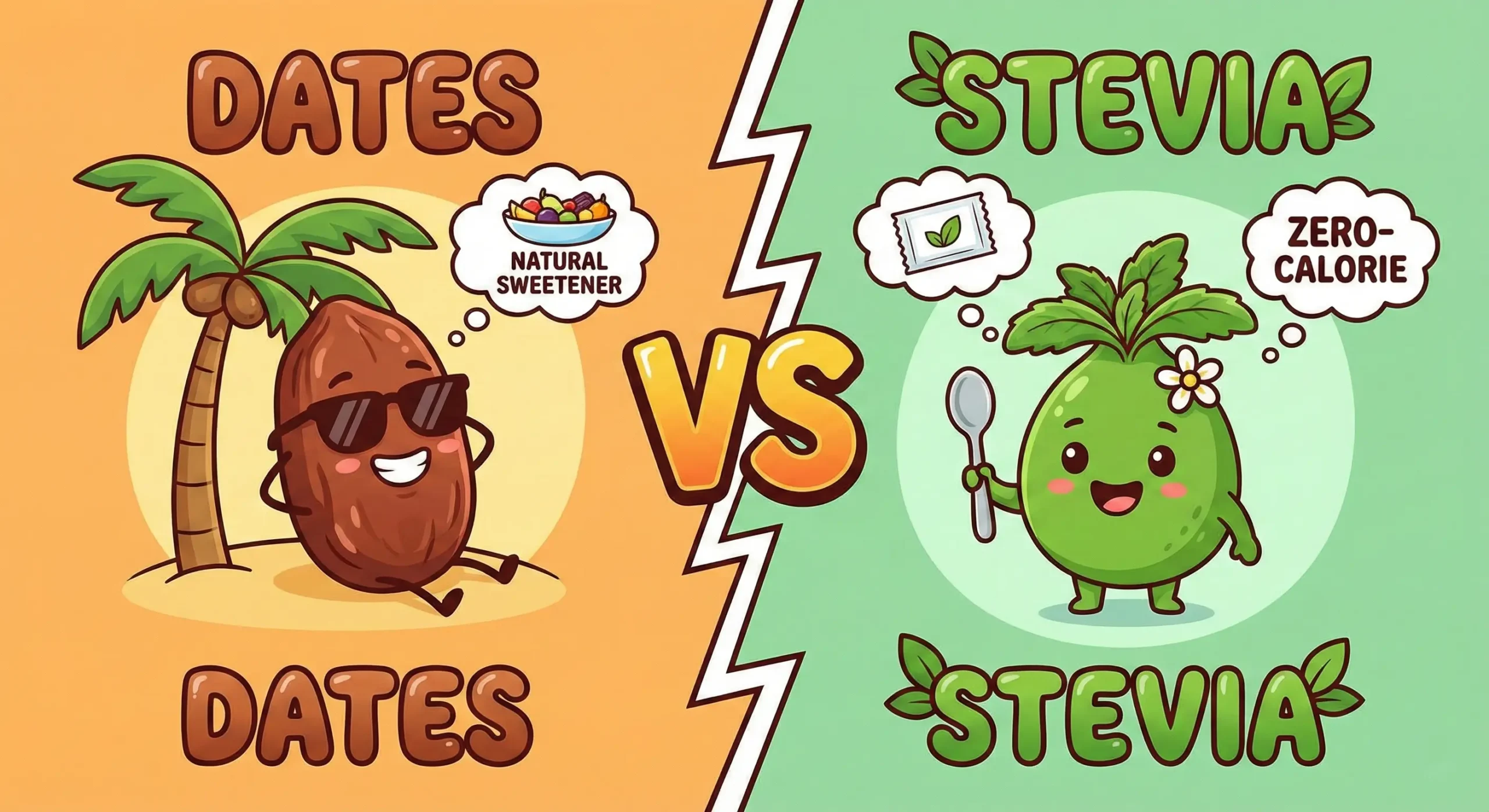
Dates vs Stevia: A Side-by-Side Comparison
| Comparison Factor | Bittersoil (Whole Dates) | Stevia & Erythritol |
|---|---|---|
| Source | Whole fruit | Chemical extract |
| Taste Profile | Rich, caramel, earthy | Metallic, bitter |
| Nutritional Value | Fiber, potassium, iron | None |
| Digestion | Gut-friendly | Can cause bloating |
| Processing | Minimal | High |
| Glycemic Index | Dates (42) | Stevia+Erythritol (<5*) |
| Price per oz | Premium | Budget |
*Low GI but may still cause insulin confusion due to intense sweetness signals.
The Whole-Fruit Sweetening Method
We don’t sweeten chocolate by isolating molecules. We use the whole fruit.
The Whole-Fruit Sweetening Method preserves taste, texture, and nutritional context.
Dates deliver sweetness alongside fiber and minerals - the way real food should.
Why We Chose the Hard Way
Using dates is difficult. They’re sticky, fibrous, and require stone-grinding for over 24 hours.
But they create body, depth, and a fudgy mouthfeel that stevia can’t replicate.
More importantly, dates provide sustained energy - not metabolic confusion.
The Bottom Line
- Commercial stevia undergoes heavy chemical extraction - it's an isolated compound, not a natural leaf.
- The metallic aftertaste and digestive discomfort aren't side effects, they're inevitable results of processing.
- Whole-fruit sweetening with dates preserves fiber, minerals, and authentic taste without metabolic confusion.
You don’t eat chocolate just to avoid calories. You eat it to enjoy life.
Ready to taste chocolate without chemical compromises?
Shop 70% Dark ChocolateSweetened with whole dates using The Whole-Fruit Sweetening Method.