
- ✓ Dark chocolate with 70%+ cacao can reduce Type 2 diabetes risk by 21% when consumed in moderation (Harvard study, 2024).
- ✓ Flavonoids in dark chocolate improve insulin sensitivity by up to 45% and support pancreatic beta-cell function.
- ✓ Date-sweetened chocolate offers a moderate glycemic response (GI 42-55) without the cardiovascular risks linked to erythritol-based "sugar-free" alternatives.
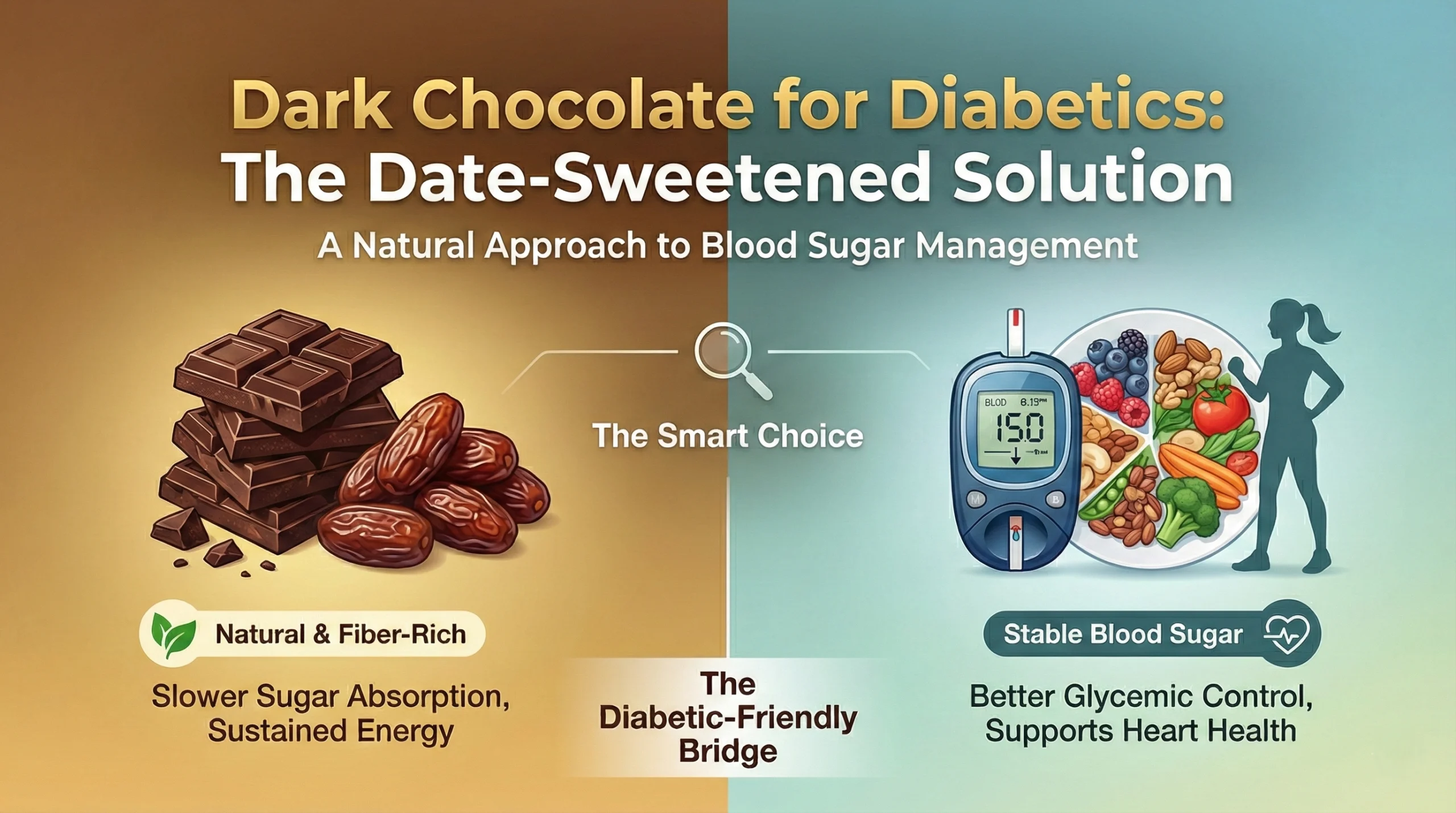
The Question Every Indian Diabetic Asks
You're managing your blood sugar levels carefully. You've eliminated mithai, cut down on rice, and said goodbye to your favorite sweets.
But every Diwali, every birthday, every celebration - the cravings return. Chocolate.
Your doctor says "avoid sugar." Nutrition labels say "sugar-free" is safe. But when you look closer, these "diabetic-friendly" chocolates contain ingredients you can't pronounce: stevia, erythritol, maltitol.
In February 2023, Cleveland Clinic researchers found that erythritol - the sugar alcohol used in most "sugar-free" chocolates in India - was linked to a doubled risk of heart attack and stroke.
For diabetics, who already face twice the cardiovascular risk of non-diabetics, this isn't just inconvenient. It's dangerous.
At Bittersoil, we don't use erythritol, stevia, or refined sugar. We use date powder - a whole-food sweetener that Indians have trusted for centuries in Ayurvedic medicine.
This isn't about finding a "guilt-free" loophole. It's about understanding which chocolate actually supports your health.
The Diabetes Crisis in India: Why This Matters
India isn't just dealing with a diabetes problem. We're facing a diabetes epidemic.
The Numbers You Need to Know
India ranks 2nd globally, just behind China.
~43.9 million people living with high blood sugar unknowingly.
Only a fraction of diagnosed patients effectively manage their levels.
The Treatment Gap
Why Urban Indians Are at Higher Risk
The prevalence of diabetes in India has risen from 7.1% in 2009 to 8.9% in 2019, with urban areas showing significantly higher rates than rural regions.
The shift from traditional diets to processed foods, sedentary office jobs, and stress have created a perfect storm for metabolic disease.
For the millions of Indians managing diabetes, finding foods that satisfy cravings without spiking blood sugar isn't a luxury - it's a necessity.
Can Diabetics Eat Chocolate? What the Science Actually Says
The Breakthrough Research
December 2024Harvard researchers published a study tracking 192,000 adults over many years. The findings were striking:
Even more revealing: People who ate milk chocolate had no reduction in diabetes risk and tended to gain weight over the course of the study. The difference? Cocoa content and the type of sweetener used.
Source: Harvard T.H. Chan School of Public Health, BMJ (2024) →How Dark Chocolate Helps Diabetics: The Mechanisms
Improved Insulin Sensitivity
A 15-day study showed dark chocolate reduced HOMA-IR (insulin resistance marker) from 1.72 to 0.94—a 45% improvement.
Translation: Your cells become better at responding to insulin, meaning less insulin is needed to control blood sugar.
Source: American Journal of Clinical Nutrition (2005)Better Pancreatic Beta-Cell Function
Your pancreas contains beta cells that produce insulin. In diabetes, these cells become exhausted. Epicatechins (flavonoids in cocoa) enabled beta cells to release insulin at a better rate.
Translation: Dark chocolate helps your pancreas do its job more effectively.
Source: Brigham Young University research (Dec 2024)Reduced Blood Glucose Spikes
A 2022 study found that sugar-free dark chocolate reduced blood glucose incremental area under the curve (iAUC) by 65% compared to conventional chocolate.
The Sweetener Problem: What's Actually in "Diabetic Chocolate"
Walk into any health store in India and you'll see brands marketed as "diabetic-safe": Zevic, DiabeSmart, A Diabetic Chef, and international brands like Lily's.
They all have one thing in common: they use stevia or erythritol as sweeteners.
Why Brands Use Stevia and Erythritol
These sugar alcohols provide sweetness without spiking blood glucose. On paper, they seem perfect for diabetics. But there's a problem most brands don't mention.
The Cleveland Clinic Study You Need to Know About
In February 2023, researchers studied over 4,000 people. Their findings sent shockwaves through the nutrition community:
The Mechanism: Erythritol causes blood platelets to clot more readily. These clots can travel to the heart or brain.
Why This Matters More for Diabetics
This isn't fear-mongering. This is reading the research that manufacturers hope you won't find.
Learn more about erythritol risks →The Date Solution: Ancient Wisdom Meets Modern Science
Dates have been used in Ayurvedic medicine for centuries as a natural energy source and digestive aid. But what does the science say about dates and diabetes?
Why Dates Work for Diabetics
Moderate Glycemic Index
Dates raise blood sugar more slowly and steadily than refined sugar—critical for preventing the spikes that damage blood vessels.
Fiber Slows Absorption
~7g Fiber per 100g slows natural sugar absorption.
Studies suggest that enjoying dates in moderation alongside healthy fats can help manage blood sugar levels.
This is exactly what happens in date-sweetened dark chocolate: the cocoa butter (fat) and fiber work together to moderate glucose response.
How Date-Sweetened Chocolate Works
When date powder is incorporated into high-cocoa dark chocolate (70%+), three things happen:
You're not eating whole dates. You're consuming chocolate where date powder provides sweetness in small, measured amounts.
A 30g serving of date-sweetened chocolate contains approximately 8-10g net carbs from dates—manageable within a diabetic meal plan.
Dark chocolate's high fat content (12g per ounce) further slows the absorption of natural sugars from date powder, preventing blood sugar spikes.
The cocoa flavonoids that improve insulin sensitivity remain intact, while the date powder provides natural sweetness without artificial compounds.
Diabetic Chocolate Comparison: What's Really in Your Bar
| Brand/Type | Sweetener | Glycemic Impact | Cardio Risk | Insulin Effect | Taste Profile | India Availability |
|---|---|---|---|---|---|---|
|
Bittersoil Date-Sweetened | Date Powder (GI: 42-55) | Moderate (Gradual Rise) | None Identified | Positive (Cocoa Flavonoids) | Rich, natural caramel | Available Nationwide |
| Zevic (Stevia) | Stevia + Erythritol | Minimal | Elevated (Erythritol Study) | Neutral | Metallic aftertaste | ₹200-300/bar |
| DiabeSmart | Stevia + Maltitol | Delayed Spike | High (GI Distress) | Neutral | Chemical sweetness | ₹250-350/bar |
| Lily's (Imported) | Stevia + Erythritol | Minimal | Elevated (Erythritol Study) | Neutral | Better than domestic | Limited (₹400-500) |
| A Diabetic Chef | Stevia Blend | Low | Moderate | Neutral | Artificial taste | ₹280-400/bar |
| Lindt 85% Excellence | Cane Sugar | Moderate | Standard (Refined Sugar) | Positive | Bitter, premium | ₹300-400/bar |
How Much Chocolate Can Diabetics Actually Eat?
The Diabetic Pain Points
Based on search data and patient concerns in India, here are the answers to the questions diabetics really want answered:
"Will this spike my sugar level?"
With date-sweetened 70% dark chocolate: expect a moderate, gradual rise of 20-30 mg/dL over 60-90 minutes, not the rapid 50+ mg/dL spike from milk chocolate or refined sugar varieties.
"Can I eat this daily or only occasionally?"
Daily consumption of 20-30g (approx. 2-3 squares) fits within most diabetic meal plans if you account for the 8-10g net carbs.
Research shows that ~1 ounce (28g) daily had the greatest reduction in diabetes risk.
"Is it suitable for Type 1 or Type 2 diabetes?"
Both types can benefit from improved insulin sensitivity. However:
- Type 1: Carefully count carbs and adjust insulin doses.
- Type 2: May see greater benefits from improved sensitivity.
"Will it affect my medication?"
Dark chocolate does not directly interact with metformin or insulin. However, improved insulin sensitivity means you may need to monitor glucose more carefully and discuss adjustments with your doctor.
Portion Guidelines for Indian Diabetics
Conservative
(Strict Control)- Dose: 15-20g daily (1-2 squares)
- Net Carbs: 4-6g
- Timing: After meals
Moderate
(Good Control)- Dose: 25-30g daily (2-3 squares)
- Net Carbs: 8-10g
- Timing: Mid-morning snack
Strategic
(Occasional)- Dose: 40g (2-3x per week)
- Net Carbs: 12-15g
- Timing: Post-exercise
Example Daily Meal Plan for Type 2 Diabetics
Total Daily Carb Allowance: 130-150g (Moderate Carb Approach)
Testing Your Response: The 4-Week Protocol
The only way to know how your body responds to date-sweetened chocolate is to test systematically.
Baseline Measurement
- Test fasting blood glucose daily for 7 days
- Record typical post-meal glucose levels (2 hours after meals)
- Note average HbA1c if tested recently
- Avoid all chocolate during this week
Introduction Phase
- Rise < 30 mg/dL from baseline
- Returns to baseline within 2 hours
- No hypoglycemic episodes
Optimization
- Increase to 25g (2-3 squares) if Week 2 went well
- Test different timings: post-meal vs. standalone snack
- Combine with protein (almonds, walnuts) to slow absorption
Validation
- Return to baseline (no chocolate) for 3 days
- Compare fasting glucose and post-meal patterns to Week 1
- Resume consumption at optimized dose
- Schedule HbA1c test if 3+ months since last check
Decision Point
If HbA1c remains stable or improves, and daily blood glucose readings are acceptable, you've found your sustainable dose.
Special Considerations for Indian Diabetics
The Gifting Dilemma
Indian culture revolves around food gifting. The question is: "Can I give this to my diabetic uncle or father?"
- Are already eating dark chocolate occasionally
- Have HbA1c <8.0% (reasonably controlled)
- Understand portion control
- Don't have severe kidney disease (potassium check)
Fasting & Religious Observances
15-20g chocolate with milk or nuts during non-fasting hours provides quick energy without heavy digestion.
2-3 dates with dark chocolate at Iftar provides natural energy replenishment without the crash of sugary sweets.
Consult your doctor: Fasting while diabetic requires supervision, especially if on insulin.
Regional Availability and Pricing
- Nature's Basket, Foodhall
- Organic India stores
- Amazon, Flipkart, Brand Sites
- Online Ordering (Primary)
- Select Local Health Stores
The Cost Reality: Is It Worth It?
Date-sweetened premium chocolate costs ₹250-400 (50-70g). This is 3-5x more than mass-market chocolate.
The investment in quality food that doesn't spike blood sugar: Priceless.
Common Mistakes Diabetic Indians Make with Chocolate
Mistake #1: Trusting "Sugar-Free" Labels Blindly
+"Sugar-free" doesn't mean "safe" or "healthy." Always check:
- What sweetener is used? (Stevia/erythritol vs. dates)
- What's the net carb content per serving?
- Are there any artificial ingredients?
Mistake #2: Eating Chocolate on an Empty Stomach
+Consuming chocolate alone causes faster glucose spikes. Always pair with:
Mistake #3: Not Adjusting Insulin Doses
+If you're on insulin, you may need to adjust your carb ratios. Work with your endocrinologist to calculate:
- Insulin-to-carb ratio for 8-10g net carbs from chocolate
- Timing of insulin dose relative to chocolate consumption
Mistake #4: Comparing Net Carbs Without Understanding GI
+Two chocolates might both have 10g net carbs, but the glycemic index matters as much as the carb count:
Mistake #5: Ignoring HbA1c Trends
+Daily readings can fluctuate, but HbA1c (3-month average) tells the real story. If HbA1c rises after introducing chocolate, you need to:
- Reduce portion size
- Test post-chocolate glucose more carefully
- Discuss with your doctor
Who Should Be Extra Cautious
Diabetics with Kidney Disease
(Diabetic Nephropathy)Dates are high in potassium (334mg per 100g). If you have chronic kidney disease (CKD) stages 3-5, excess potassium can be dangerous.
Pregnant Diabetics
(Gestational Diabetes)Blood sugar targets are stricter during pregnancy. Dark chocolate's flavonoids may improve endothelial function, but carb control is paramount.
Uncontrolled Blood Sugar
(HbA1c > 9.0%)If your diabetes is poorly controlled, focus on getting HbA1c below 8.0%, establishing stable patterns, and working with a dietitian first.
Children with Type 1 Diabetes
Children's carb needs and insulin sensitivity differ from adults. Dark chocolate can fit into a pediatric meal plan, but requires care.
- Start with 10g portions
- Always pair with fat/protein
- Monitor blood glucose 2-3 hours post-consumption
The Bottom Line
- ✓ Dark chocolate with 70%+ cacao can reduce Type 2 diabetes risk by 21% and improve insulin sensitivity by up to 45% due to cocoa flavonoids that enhance pancreatic beta-cell function.
- ✓ India's 89.8 million diabetics face additional cardiovascular risk—making the choice of sweetener critical, as erythritol doubles heart attack and stroke risk according to 2023 Cleveland Clinic research.
- ✓ Date-sweetened chocolate offers a moderate glycemic response (GI 42-55) with natural fiber that slows sugar absorption, providing diabetics a safer alternative when consumed in portions of 15-30g daily.
Try our 70% Date-Sweetened Dark Chocolate - made with date powder using The Whole-Fruit Sweetening Method.
Each 25g serving delivers 8-10g net carbs from real food, with cocoa flavonoids that improve insulin sensitivity.
Shop 70% Dark ChocolateFrequently Asked Questions
Can diabetics eat dark chocolate every day?
Yes, if portion-controlled. Research shows 1 ounce (28g) daily consumption is associated with 21% lower diabetes risk. For existing diabetics, 15-30g daily fits most meal plans if net carbs are accounted for.
What percentage of dark chocolate is best for diabetics?
70-85% cacao is ideal. Higher percentages (85-90%) have even fewer carbs but may be too bitter for most people. Lower than 70% contains too much sugar.
Will dark chocolate lower my blood sugar immediately?
No. Dark chocolate doesn't lower blood sugar acutely. Its benefits come from improved insulin sensitivity over weeks to months of regular consumption, not immediate glucose reduction.
Is date-sweetened chocolate better than stevia chocolate for diabetics?
For most diabetics, yes. Date-sweetened chocolate avoids the cardiovascular risks linked to erythritol (used with stevia in most brands) while providing a moderate glycemic response. However, stevia chocolate has lower net carbs—discuss with your doctor which suits your control level.
Can I eat dark chocolate before or after meals?
After meals is generally better for diabetics. When blood sugar is already rising post-meal, adding chocolate causes a smaller relative spike than eating it alone on an empty stomach.
Does dark chocolate interact with metformin or other diabetes medications?
Dark chocolate does not directly interact with metformin, glimepiride, or insulin. However, improved insulin sensitivity from regular consumption may require medication adjustments. Monitor blood glucose closely and inform your doctor.
How much dark chocolate is too much for a diabetic?
More than 40-50g daily (4-5 squares) provides excess carbs and calories without additional benefits. The dose-response curve plateaus at ~1 ounce/day according to research.
Can dark chocolate help reverse prediabetes?
Regular dark chocolate consumption is associated with lower progression from prediabetes to diabetes, but it's not a cure. It works best as part of a comprehensive approach: weight loss, exercise, and reduced refined carb intake.
Should I check my blood sugar after eating chocolate?
Yes, especially when first introducing it. Test at: baseline (before eating), 30 min, 60 min, and 120 min post-consumption. This reveals your personal glucose response pattern.